
Four projects to show how we’re building applied AI
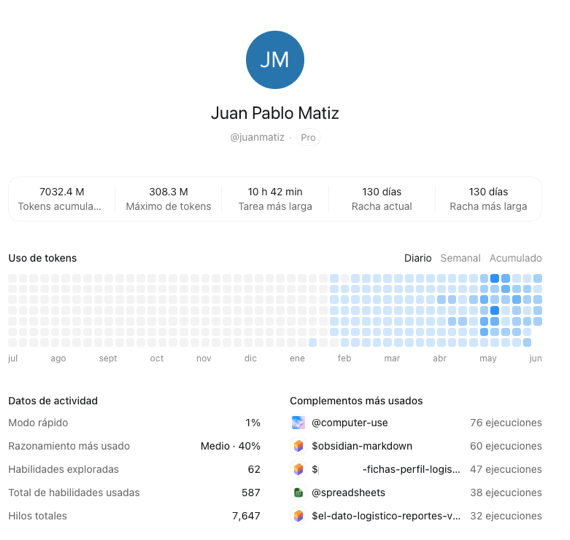
Over the last 130 days I’ve consumed more than 7 billion tokens.
The figure sounds big, but for me the number isn’t the point. What matters is what it was for.
I didn’t use them just to code. I didn’t use them for one-off experiments. I didn’t use them to chase every new tool that shows up.
I used them to learn how to build a real workbench with artificial intelligence.
A bench where there are agents, sources, documents, data, memory, emails, live reports, automations, conversations and processes that start working with continuity.
And that experience left me with an increasingly clear conviction:
applied AI can’t be understood in the abstract. It’s understood when you connect it to real work.
That’s why we want to start showing some of the projects we’ve been building at Atiemppo. Not as perfect demos. Not as isolated pieces. But as live cases that explain a different way of working with artificial intelligence.
In this first series we’ll show four projects.
Each answers a different question:
- what happens when an AI stops answering and starts executing;
- how scattered logistics information is monitored with specialized agents;
- how a live editorial system is built with data, sources and memory;
- how applied AI is taught to people who aren’t necessarily programmers.
And this is only the beginning. We’ll keep showing more projects, lessons and cases as the workbench keeps growing.
The thesis: agents for real processes
Today many conversations about artificial intelligence start with the tool.
Which model to use.
Which app to try.
Which prompt to write.
Which automation to install.
That matters, but it shouldn’t be the starting point.
The starting point should be the process:
- what information repeats;
- what decisions need better context;
- what sources have to be checked;
- what documents are consulted all the time;
- what reports are prepared manually;
- what tasks get lost between emails, chats and folders;
- what knowledge stays scattered in people’s heads.
When a company looks at AI from there, the conversation changes.
It’s no longer about “having a chatbot.” It’s about designing agents with a role, sources, memory, tools, limits and deliverables.
That’s the idea we want to show with these four projects.
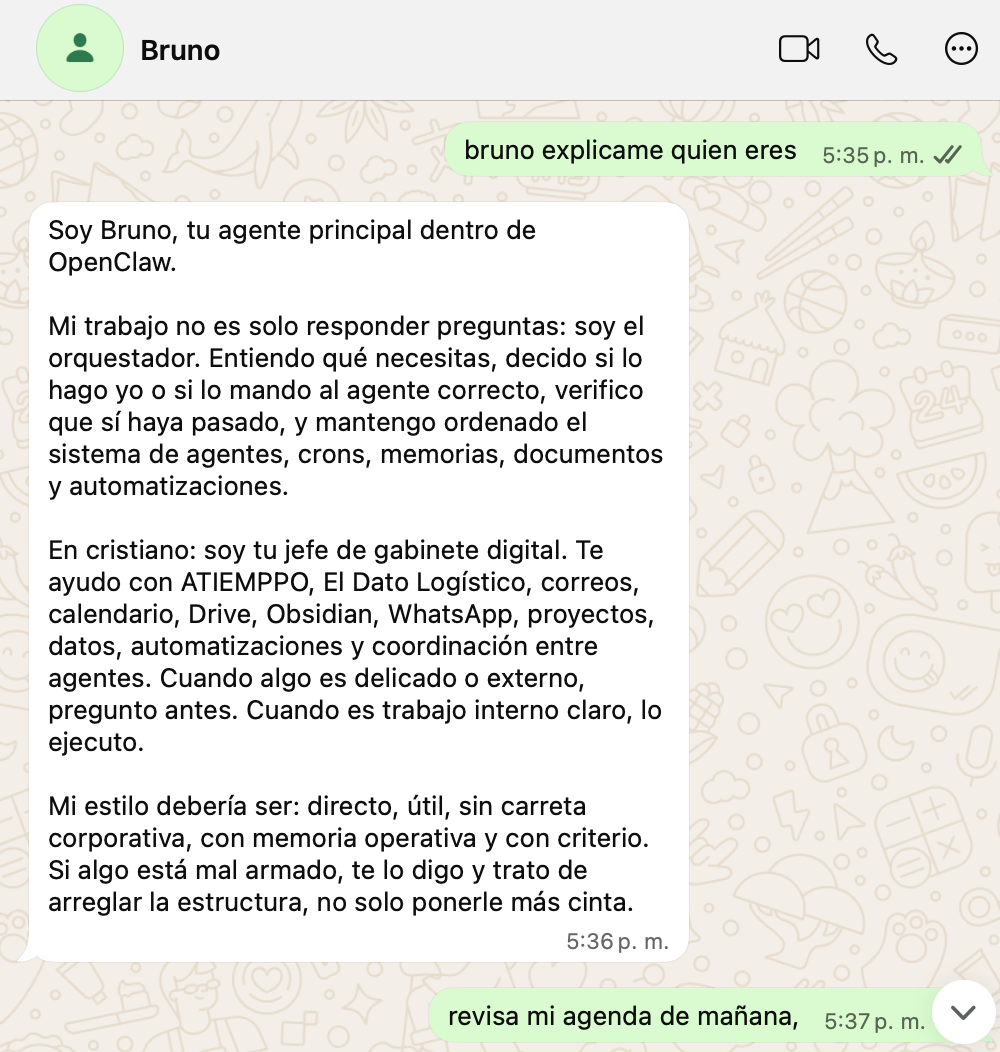
1. Bruno and OpenClaw: an AI that doesn’t just answer, it does
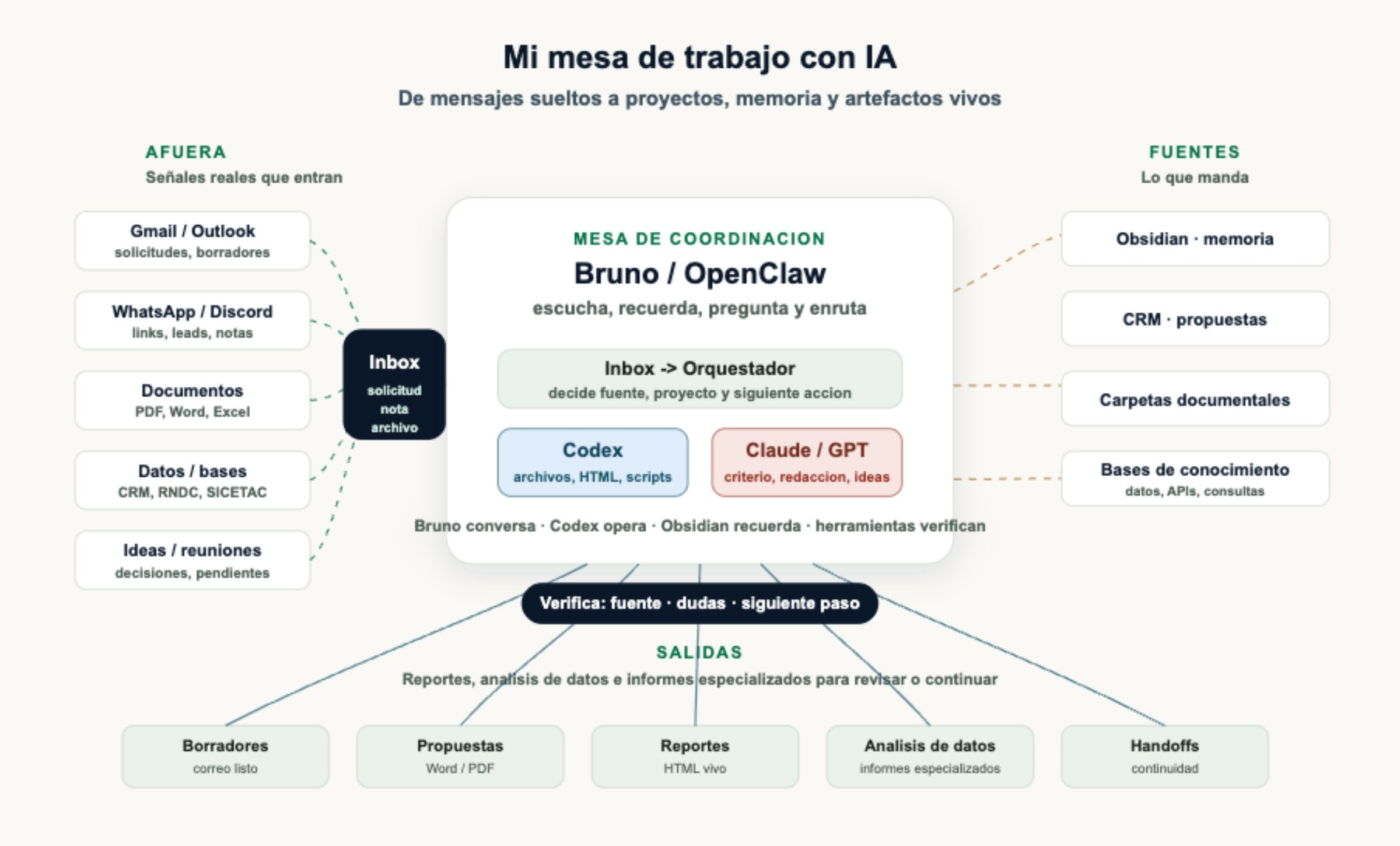
The first project is Bruno, our orchestrator built on OpenClaw.
Bruno represents an important shift: moving from an AI that converses to an AI that can help move real work.
It can review information, coordinate agents, check sources, prepare documents, read emails, trigger flows, leave evidence, organize deliverables and help a request move forward until it becomes a result.
The idea isn’t for Bruno to be “an AI for everything.” The idea is for it to work as a coordination layer: it understands the goal, identifies which tool or agent should step in and helps sustain continuity across tasks.
That point is key for companies.
Because many organizations already have information, documents, processes and tools. What they lack is a layer that helps connect all of that with more context and less friction.
Bruno and OpenClaw show that possibility: AI as work infrastructure, not just a chat window.
Read the Bruno and OpenClaw case
2. Novedades en Vías: logistics monitoring with specialized agents
The second project is Novedades en Vías.
In logistics, a road incident can change a route, delay a delivery, affect a commercial promise or generate extra costs before the information reaches every team in an organized way.
The problem isn’t that information doesn’t exist. The problem is that it’s fragmented.
Part shows up in official sources. Part in road concessions. Part on social media. Part in regional outlets. Part in authority reports that change throughout the day.
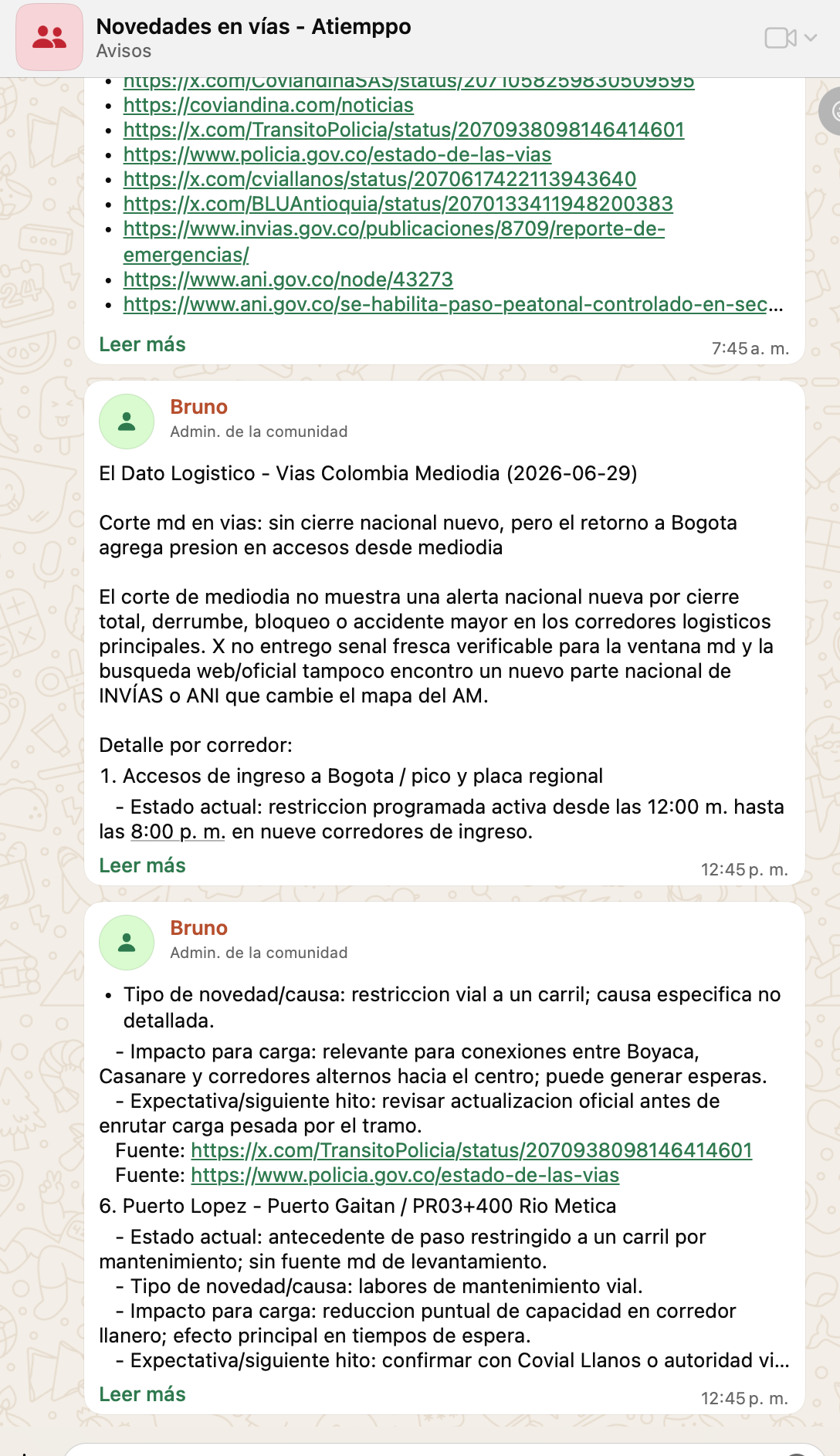
Novedades en Vías shows how a specialized agent can monitor that environment, separate signal from noise, compare against previous cutoffs and deliver a useful reading for decision-making.
It isn’t about listing news. It’s about building tracking.
What changed.
What’s still active.
What source backs it.
Which corridor needs watching.
What can’t be stated yet.
This case shows something very concrete: AI agents can help logistics operations turn scattered information into operational intelligence.
Novedades en Vías
Join the WhatsApp group to receive alerts and operational cutoffs.
Scan the QR or use the link to follow the road updates that can affect logistics decisions.
Read the Novedades en Vías case
3. El Dato Logístico: a live editorial system
The third project is El Dato Logístico.
In transport, foreign trade and logistics there’s an excess of information: news, data, documents, regulations, blockades, port reports, costs, public databases, social media and technical conversations.
But having more information doesn’t mean having more judgment.
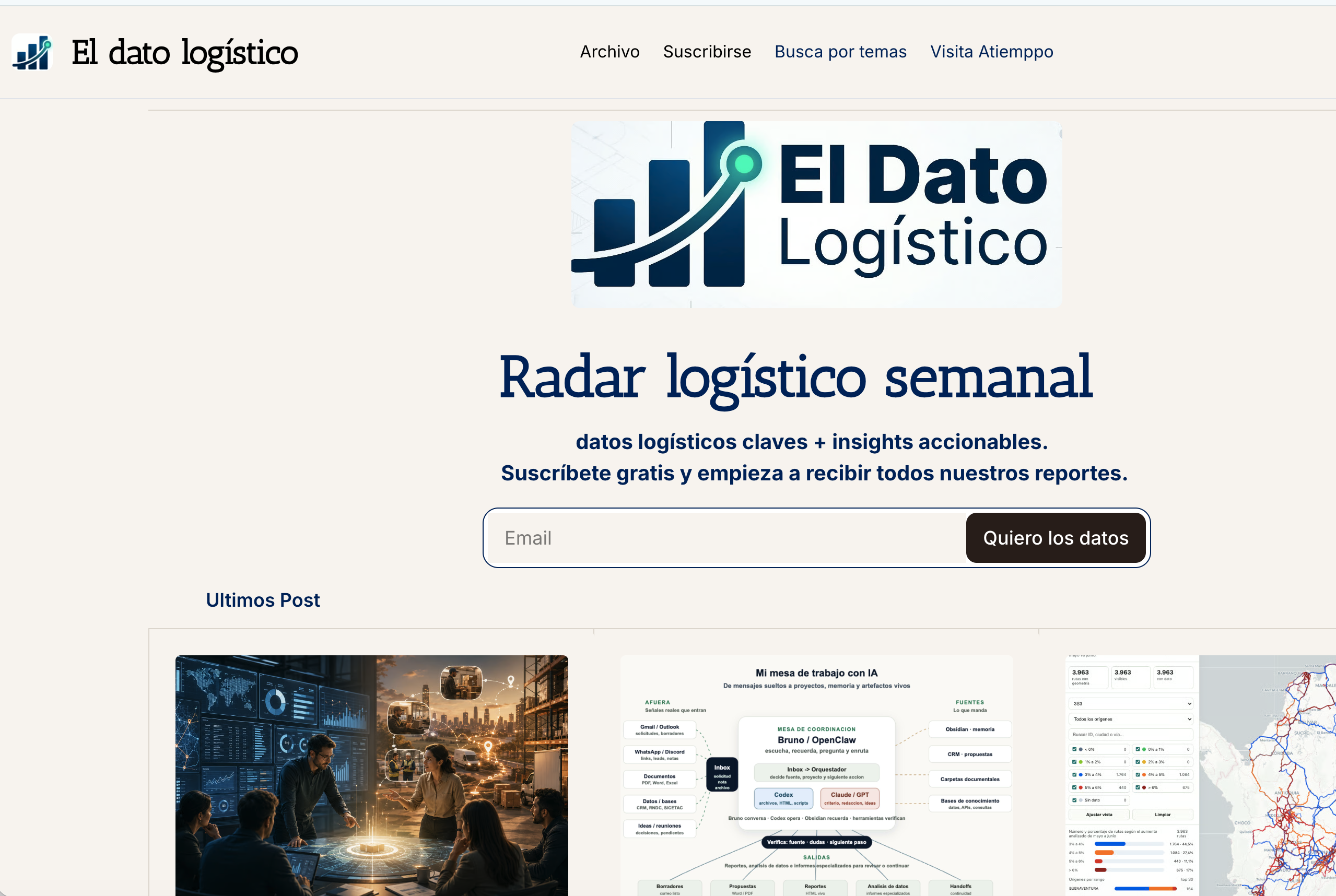
El Dato Logístico shows how to use AI agents to create a live editorial system: monitor signals, organize topics, prioritize angles, draft pieces, edit content, query data and build live reports.
The difference from “using AI to write content” is enormous.
It isn’t about producing generic text. It’s about creating an editorial operation with sources, memory, traceability and continuity.
A finding can become an article.
An article can feed a topic map.
A map can become a live report.
A live report can update when new evidence appears.
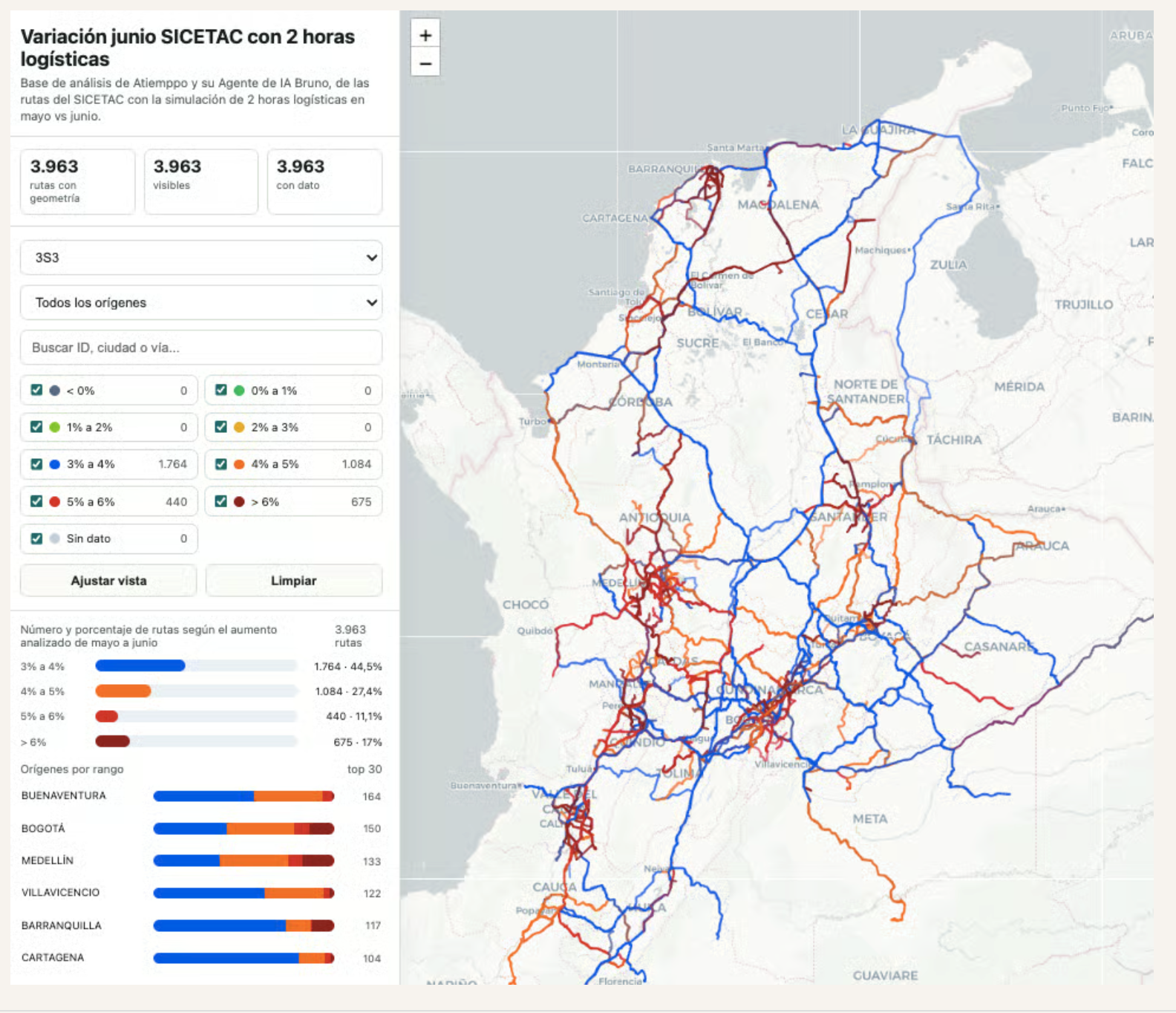
That pattern isn’t only useful for a media outlet. It can also serve companies that need sector observatories, competitive intelligence, regulatory tracking, internal reports or queryable knowledge bases.
Read the El Dato Logístico case
4. Profe Bruno: learning AI by working on real cases
The fourth project is Profe Bruno.
After months building this workbench, one conclusion keeps repeating: AI isn’t adopted just by buying tools. It’s adopted when people learn to use it with judgment in their daily work.
That’s why Profe Bruno was born as a way to share what we’ve learned.
Not to turn everyone into a programmer. Not to sell hype. Not to say AI does everything.
But to help people and teams learn applied AI with real cases:
- ask better questions;
- work with documents and sources;
- review results before using them;
- turn repeated tasks into flows;
- create reusable prompts;
- understand what an agent can do;
- know when to automate and when to keep human control;
- build their own workbench.
Profe Bruno also plays an important commercial role: training can be the entry point to larger projects.
A workshop can reveal a process that needs an agent.
An exercise with documents can show the need for a knowledge base.
A class on reports can turn into an automated flow.
Learning AI, done well, is also about discovering opportunities.
What they have in common
These four projects look different, but they share the same architecture of thinking.
All start from a real need.
Bruno coordinates work.
Novedades en Vías monitors logistics signals.
El Dato Logístico turns information into editorial intelligence.
Profe Bruno teaches how to build AI capabilities from practice.
The same pattern appears in all of them:
- define a concrete problem;
- identify sources;
- create working rules;
- use specialized agents;
- keep memory;
- produce deliverables;
- review and improve with evidence.
That pattern is what we want to bring to more companies.
Not a generic AI.
Not a demo.
Not an abstract promise.
AI systems applied to real processes.
We’ll keep showing
These four projects are a first sample.
We’ll keep publishing more cases, because the workbench isn’t finished. On the contrary: each project opens new questions.
How to converse with databases.
How to automate live reports.
How to build persistent memories.
How to connect agents with email, WhatsApp, documents and data.
How to connect agents with live sources such as public conversations, trends, official documentation and APIs.
How to review the quality of what an AI produces.
How to train teams so they don’t depend on a single person.
How to turn an idea into a verifiable flow.
That’s the exploration we want to share.
And it’s also the offer we want to build at Atiemppo:
helping companies, teams and people move from testing AI to building real capabilities.
The next article in the series digs into one of those opportunities: agents connected to live sources through MCP, able to monitor public conversation, signals and official documentation with traceability.
Read the article on X MCP and agents connected to live sources
An invitation
If there’s one thing I’ve learned in these 130 days, it’s that artificial intelligence starts to become powerful when it stops being an external tool and becomes part of the workbench.
A bench where ideas become tasks.
Tasks become flows.
Flows become deliverables.
And deliverables become memory to keep learning.
That’s the difference between using AI and building with AI.
At Atiemppo we want to keep showing that path with concrete projects.
Four begin this series.
More will come.
If your company wants to identify which processes can become agents, live reports, knowledge bases or AI workbenches, let’s talk.