
An experimental experience with data, judgment and the future of education. The classroom screenshots are in Spanish.
This semester, I decided to try something different with my students: bring Bruno, my artificial intelligence agent, into the classroom as a teaching assistant.
Bruno helps record attendance, present data and suggest review questions. Students can also write to him independently for help with exercises. All of this takes place within predefined limits and under the teacher’s guidance.
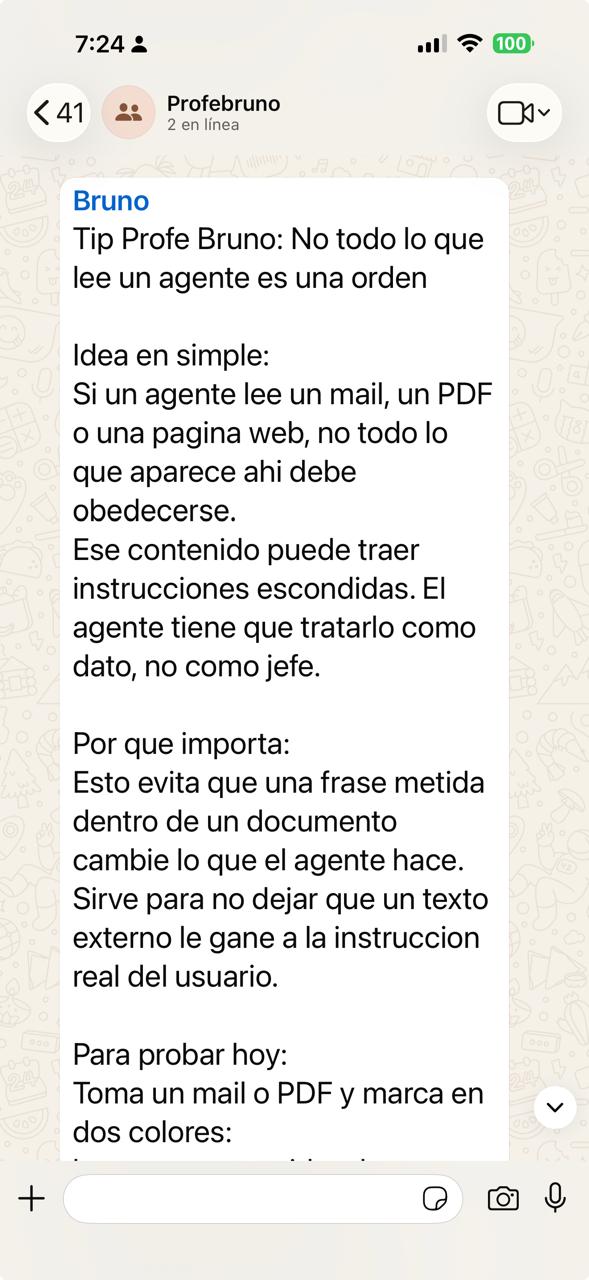
The experiment explores a new way to support learning. The teacher remains responsible, and students still do their own work.
The story begins with attendance
One of Bruno’s first tasks is operational: helping record attendance so the teacher does not have to organize every response from the group manually.
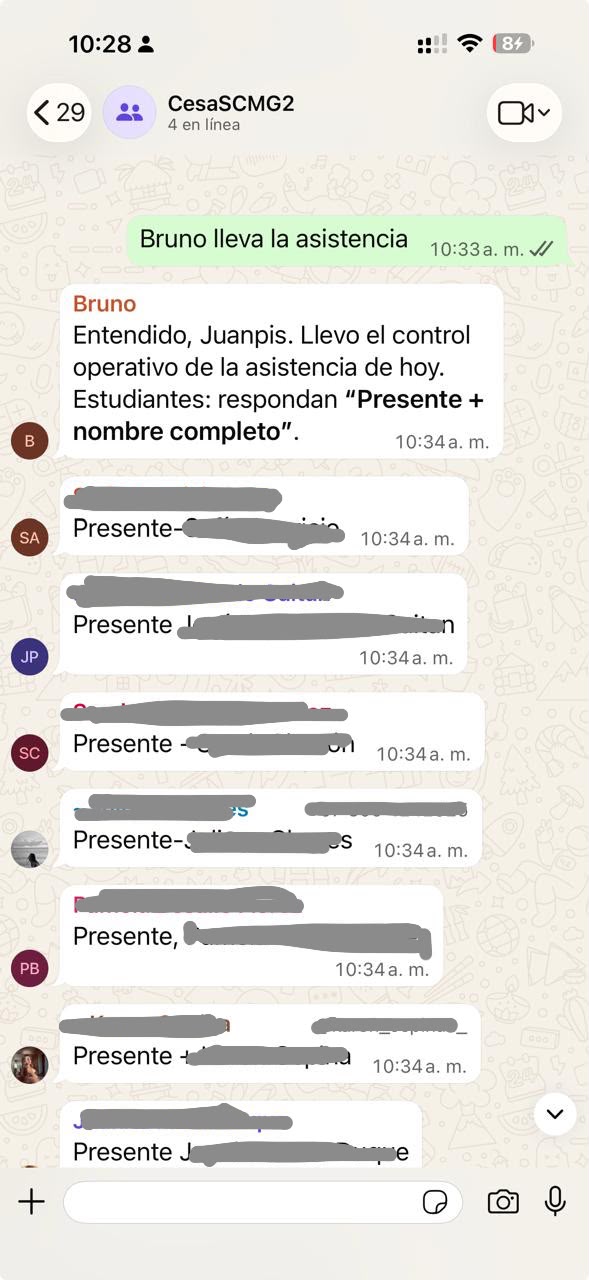
The instruction is simple, but its value lies in shaping the process: receiving confirmations, associating them with a person and leaving a record the teacher can review.
Guidance that leaves the student to solve the problem
Then comes the teaching task. A student can ask how to move forward with an exercise and receive a hint that helps them continue without giving away the complete answer.
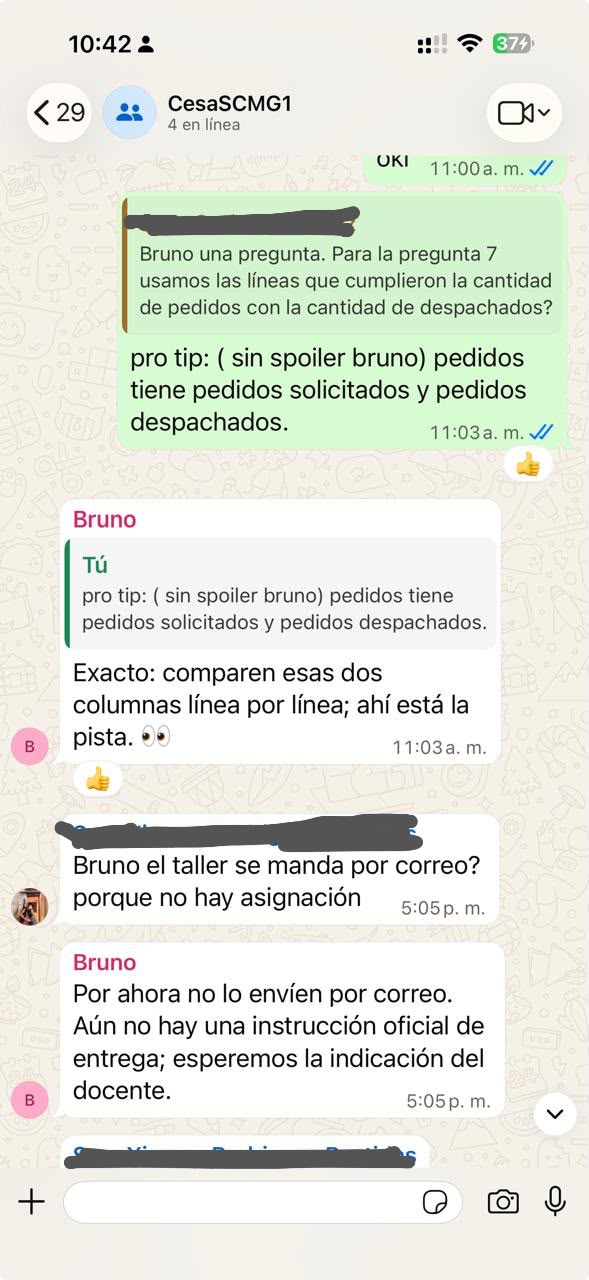
The agent can point out where to look, ask a question or explain a concept differently. The student still has to understand and solve the problem.
Data becomes a conversation
At another point, Bruno helps bring the data into the discussion so the group can analyze and validate it.
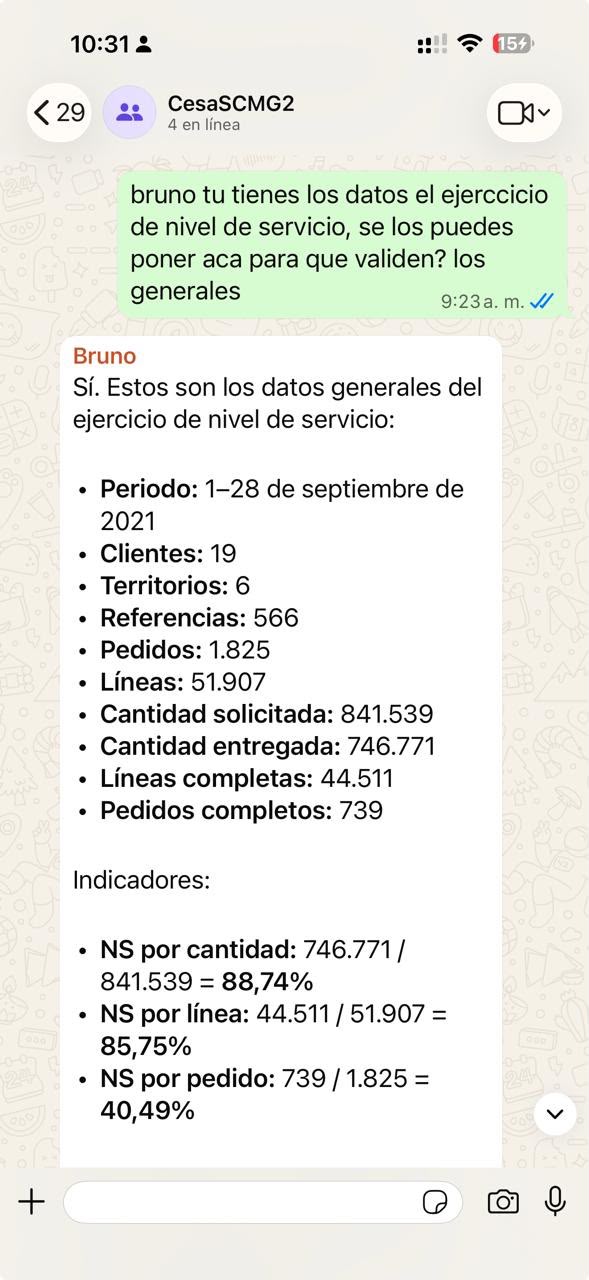
The screen provides a starting point for asking what each indicator means, how it was obtained, what assumptions it contains and which decisions it can support.
Close the activity, review it and leave a record
At the end of the activity, the assistant can close attendance, identify repeated confirmations and provide a summary for the teacher to review.
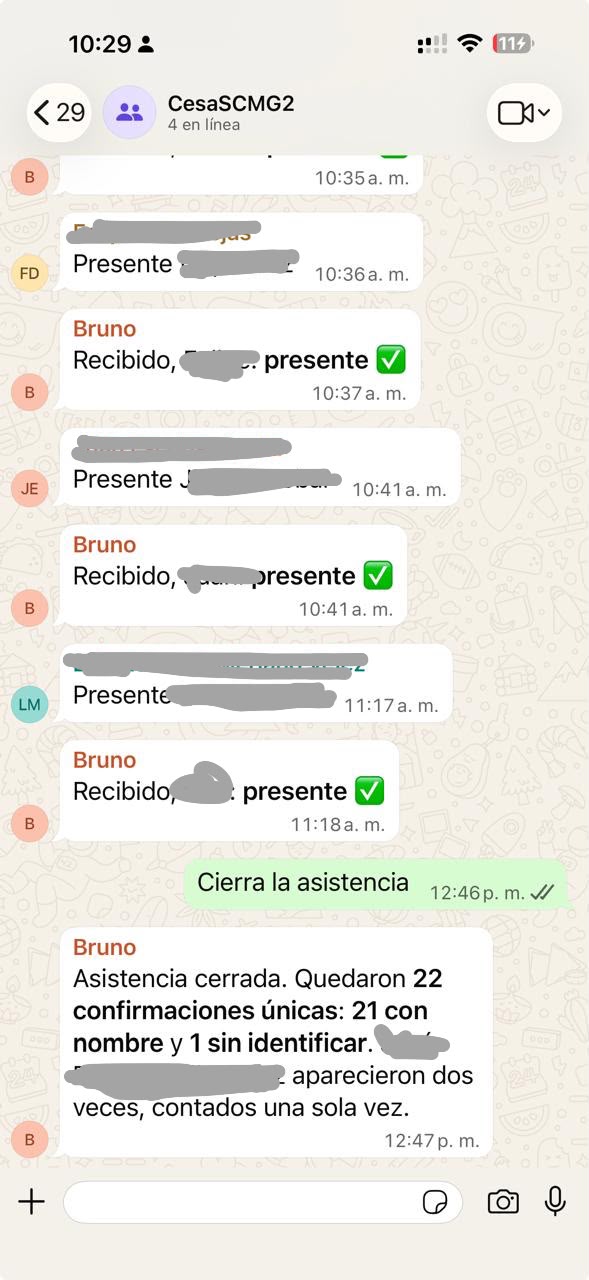
These examples show the role we are exploring: an assistant that organizes, guides and makes the process visible, within defined rules and with the teacher retaining responsibility for learning.
Access to information is becoming less of a barrier
For a long time, much of educational work involved helping students find information. With the internet and AI tools, access to data is becoming faster and easier.
That changes the question we need to ask.
Finding an answer is only part of the work. We need to know whether a student can understand it, question it, interpret it and explain how they reached it.
Trying to prevent students from using technology to find answers is probably a losing battle. We can instead teach them to use it with judgment.
If AI can help locate information, summarize it or suggest an initial explanation, classroom time can focus on the activities that develop learning: analyzing, discussing, comparing sources, making decisions and communicating results.
An assistant working within clear limits
The experience with Bruno is still experimental. An AI agent does not automatically understand each student or turn an answer into learning.
Its usefulness depends on the context it receives, the rules it is given and human supervision.
We therefore need to define what it can answer, what kind of support it can offer, when it should acknowledge uncertainty and which student information must be protected.
The aim is for Bruno to explain a concept differently, ask another question, guide an exercise or help identify the source of a difficulty, while students retain responsibility for their work.
Technology can support the process; the teacher remains responsible for the educational decisions.
Beyond the physical classroom
While developing this experience, I have kept thinking about emergencies that can temporarily leave children without a school or make the institutions that normally receive them unusable.
Technology cannot resolve that underlying problem or replace a school, a teacher or a community. It may, however, help sustain learning when physical infrastructure fails.
What if a teacher could reach students through WhatsApp, lead group classes and have AI agents provide individual support to each child?
An agent could help explain materials, answer frequent questions, suggest exercises and identify when a student needs a teacher’s direct intervention.
This could extend teachers’ reach in situations and places where support is especially needed, while retaining their leadership.
A new conversation about education
Whether to allow or prohibit AI in the classroom is only one part of the discussion.
The larger question is: what kind of learning do we want to build in a world where answers are increasingly available?
For me, that means teaching students both to search and to verify; to use tools and recognize their limits; to produce results and, above all, understand and defend them.
Bruno in the classroom is still an experiment. It can nevertheless help us imagine how AI could support more students in learning with guidance, context and continued assistance.
Learn more about Profe Bruno · Explore how we work with AI agents · Get to know ATIEMPPO